
The patient chart, with its history
The patient chart: notes, documents, allergies and history, with an audit trail of who viewed or changed what.
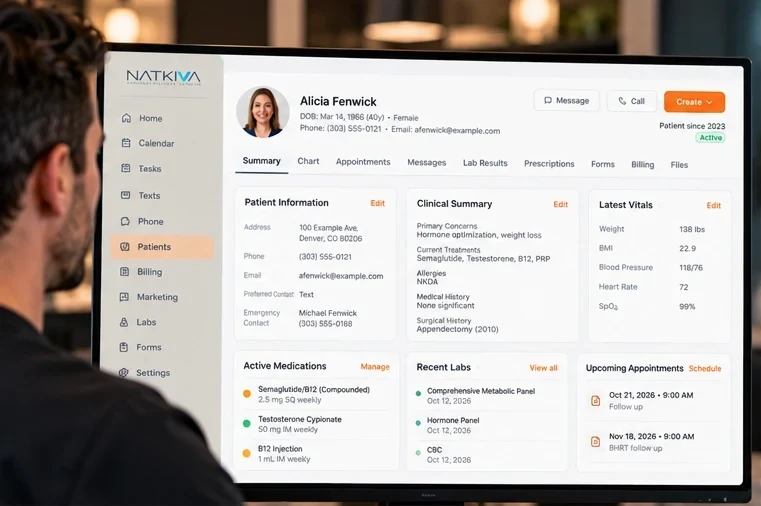
Everything about the patient on one page
Demographics, allergies and history, notes, labs, prescriptions, documents, forms, appointments and invoices, together on one page the clinic arranges.
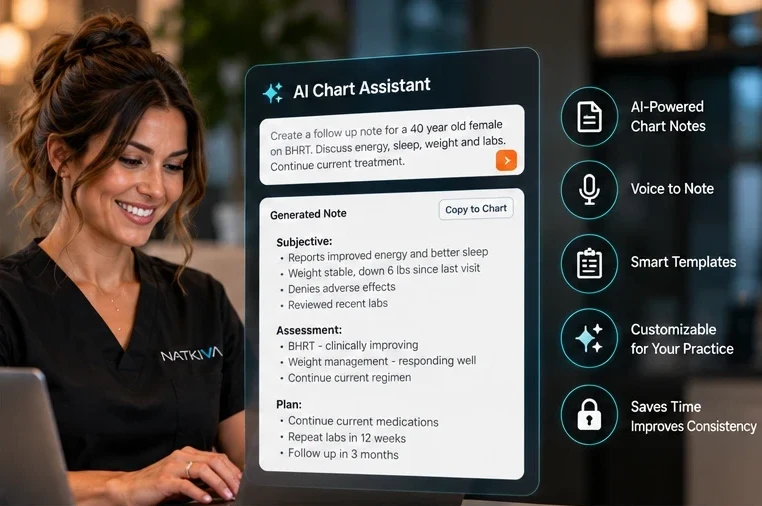
Notes get signed
A note is written, then signed, and a signed note is locked; corrections are recorded and earlier versions kept. Medication orders can need a second person’s sign-off. Nothing enters the chart without a signature.
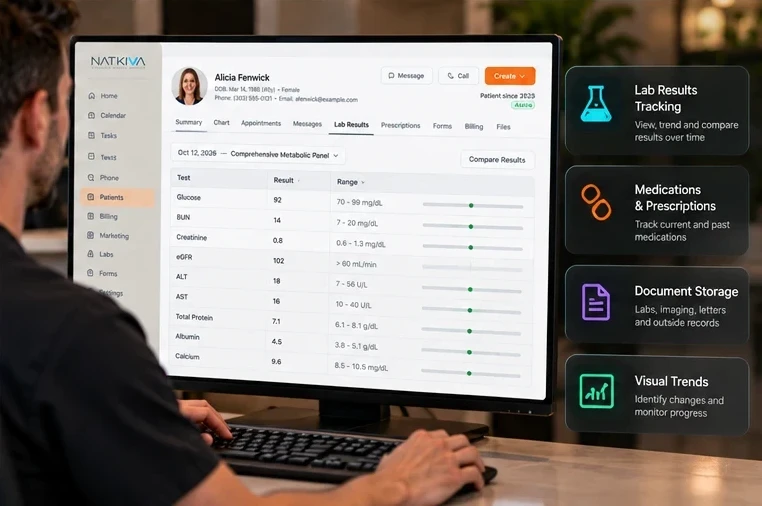
Labs and medications
Lab reports are filed on the chart and shared with the patient in the portal, report by report, when the provider chooses. Current medications and prescriptions sit in their own tiles, so the whole picture is on one page.
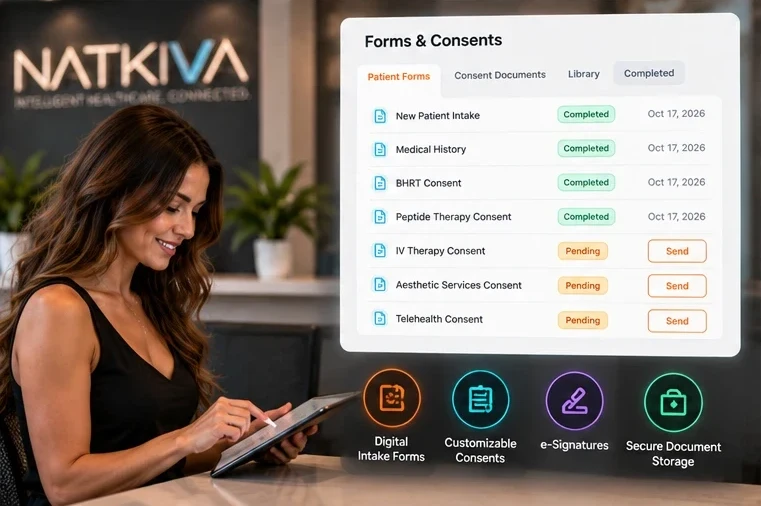
Documents and exports
Files are uploaded into the chart and listed as documents. A patient’s complete record exports in standard formats (PDF, C-CDA, FHIR, spreadsheet and CSV), for one patient or the whole practice, and every export is recorded in the audit log.
Who saw what
Every view, export, sign-in and change of patient data is recorded in an audit log that no staff role can edit or delete.
Dictation
Providers dictate their notes, and staff dictate texts and emails. The words appear on the screen as they are spoken.
Built with HIPAA in mind
Each clinic’s data lives in its own database on Amazon Web Services (AWS) in the United States, under a Business Associate Agreement. Roles decide who can read or change which rows, in the app and in the database itself. Nothing about patients is logged in plain text; nothing is shared with any other clinic.
Keep exploring the platform.
Natkiva is in active development, built and tested inside R2 Medical Clinic in Denver. See how the parts fit together or get in touch.